Showing posts with label Interview. Show all posts

Thursday, May 24, 2007

"Poe" was born - Interview by Moto Hagio III

Interview with the Vampire The Vampire Chronicles (film)(Continued from Installation 2)

Moto Hagio Interview (Installment 3)
*So was born "Poe no Ichizoku"

—Some say your magnum opus "Poe no Ichizoku" was influenced by Mr. Ishinomori's short "Mist, Roses, and Stars" (1962). Is it true?

Hagio: Yes, it was. I think I read "Mist, Roses, and Stars" when I was in middle school as a one-shot short in an extra issue of some magazine, just like I read "Yesterday Comes No More, But Neither Tomorrow…" Back then, it seemed like (Mr. Ishinomori) was into time lag—stories that jumped around between the past and future—and he did some full-blown time-shift stories for shojo manga, which were very rare. At that time, I thought "Mist, Roses, and Stars" was such type of story. It was about a girl who turned into a vampire and lived through the past, present and future. So, much later, when I thought about drawing a vampire story, what came back to me out of the blue was "Mist, Roses, and Stars." I thought, "Rather than be confined to one era, one scene, or one town, where a vampire appears, I could draw the past and future of the scenes as well." In "Mist, Roses, and Stars" you have the same scenes in the past and future, but the protagonist doesn't age. So I went, "Hot dog!" (laugh) As for vampire stories, I had read a Japanese edition in a manga called "Dracula the Vampire" by Mitsuteru Yokoyama, but I couldn't finish it because the images were too scary. I was under the impression that vampires were scary, so I don't know what went wrong when I decided to draw [vampires], I remembered the vampire in Mr. Ishinomori's story was beautiful, so I thought I would want to do it myself if it was a pretty vampire.

—I don't think there were any vampire stories that weren't "horror" back then.

Hagio: I don't remember anything else. So I went to see several movies when I decided to draw vampires, but I got scared whenever there were innocent families or a protagonist and they got attacked one by one by vampires laughing, "Mwahahaha." (laugh)

—Those are basically horrors. "Poe no Ichizoku" was special because it was drawn from the vampires' perspectives.

Hagio: Recently, there are some that are written from the viewpoint of vampires, such as The Vampire Chronicles by Anne Rice. I first saw it [Interview with the Vampire] in the film, and I thought it was cool and started reading the novels. When I discovered that they came out about two years after I did "Poe no Ichizoku," I broke out in a cold sweat, thinking "Oh, god, thank god I was first." (laugh) [the rest is omitted from translation]

(End)

"Poe" was born - Interview by Moto Hagio II

Osamu Tezuka - Portrait
(Continued from Installment 1)

Moto Hagio Interview (Installment 2)
*Even the fighting scenes were sexy

—They say Dr. Osamu Tezuka and the so-called Tokiwa-so generation cartoonists were actively incorporating cinematic approaches in manga and innovative compositions. What do you think were Ishinomori's individual characteristics in his approaches?

Hagio: I think the most singular characteristics of Mr. Ishinomori were his poetry and his delicate pen strokes. I think cinematic approaches and compositions existed before Dr. Tezuka, but he advanced the techniques in laying out the page with a literary sensibility to such a point that it felt like you were really watching a movie, flowing naturally from one panel to the next. Then I think Mr. Ishinomori adapted his style to something we can only call "Ishinomori Rhythm."

—Do you mean there was something particular to his style, that was different from Tezuka's?

Hagio: There are significant similarities among Mr. Ishinomori, Ms. Hideko Mizuno, and Dr. Tezuka in drawing styles and the overall flavor of their layout. Ms. Mizuno and Mr. Ishinomori even collaborated in the beginning. But there are individual characteristics nonetheless, and Ms. Mizuno's strokes were very gorgeous and glittering. Mr. Ishinomori's were delicate and fragile, especially when you see his work in shonen manga [magazines]—you notice that his contribution stands out for its delicateness, like a handsome boy in the middle of fearsome warriors. (laugh) Dr. Tezuka drew in a round style but his strokes were sharp and hard. They appeared very solid.

—And you, Hagio-san, were influenced by those pioneers, too?

Hagio: Today we can use various ways to divide a page into panels, but you seldom saw "Variable-shape Panels" in shonen manga magazines back then, and you could follow the panels in a flow. I learned such rhythms—the pacing—of the layout from them. Dr. Tezuka, Mr. Mitsuteru Yokoyama, Mr. Ishinomori, and Mr. Tetsuya Chiba, they all have their own pacing and stage direction. This may sounds strange, but you can follow all the lines in a balloon. I thought it was a given, but when I became a pro and Gekiga came out, I couldn't read in one breath all the lines in balloons because they were very verbose. (laugh) So I realized this was a very important technique. When it comes to Gekiga, I cannot read [balloons] without taking a breath in the middle. Then I forget what was depicted in the picture while I am reading.

—You ended up just following the lines.

Hagio:

Yes, yes! It just becomes an illustrated story. Cartoonists from Mr. Ishinomori's generation placed just enough lines in a balloon for one breath, no more, no less. It's not tiring to read them, and they were easy to absorb. Back then even my brain was plastic and flexible, so I could just remember a manga of this length (one-shot short) for about a year, with all compositions and lines. I absorbed them like photographic papers. But that didn't work for Gekiga. (laugh) [the rest is omitted from translation]

(Continues to Installment 3)

Wednesday, May 23, 2007

"Poe" was born - Interview by Moto Hagio I

There is a website called "Ishinomori Shotaro Complete Comic Works" run by Kadokawa, which is dedicated to the late Shotaro Ishinomori. It includes interviews with such notable people as Go Nagai (Cartoonist), Katsuhiro Otomo (Cartoonist/Animator), Sakyo Komatsu (SciFi Novelist), Yasutaka Tsutsui (SciFi Novelist), Mamoru Nagano (Animator), Hiroshi Fujioka (Actor), Shinichi Suzuki (Animator), Hideaki Anno (Animator), Jun Miura (Critic), Keiko Takemiya (Cartoonist), and, of course, Moto Hagio. You may recognize some of these names and be very curious about what they say, but this time I am going to focus on Hagio and only those bits that I find interesting to keep it short.

The interview is about Ishinomori, so it is not of our immediate interest, but there are some passages that reveal a great deal about Hagio. So I am going to translate only those passages that are relevant to our topic of interest: Hagio. Her interview was posted to this website on Nov 15, 2005.

-------------------
Moto Hagio Interview (Installment 1)
*009 was my idol

—Today I would like interview Ms. Moto Hagio about Mr. Shotaro Ishinomori's personality and his works. Hagio-san, I assume you read Ishinomori's work in your childhood. Do you remember any works of his that impressed you back then?

Hagio: Yes, back when I was in elementary school, there was a rental bookstore nearby. "Yesterday Comes No More, But Neither Tomorrow…" (1961) was in an extra issue of some magazine and I was blown away when I read it. Around that time, I rented "Shojo Club" regularly and had read "Emiko Story" (1962). And I then read "Funny Funny Funny That Girl" in "Weekly Margaret" (1964—). Then a bit later, I got obsessed with "Mutant Sabu" and "(Cyborg) 009."

—What was it that impressed you in "Yesterday Comes No More, But Neither Tomorrow…?"

Hagio: A girl comes from the future and she grows older and bigger (each time she appears); that idea, of a sort of time-layered structure, was in itself intriguing to me and I was wowed by it. I had also been reading "Ghost Girl" on and off since the second grade. It was about the 4th dimension, and the answer to the question, "How could she get inside the enclosed room?" was also based on the time gap (idea), and so I was interested in that one too. Besides, his drawings were cute.

—Not only was Ishimori popular among women in his shojo manga era, but also for his shonen manga works like "009," wasn't he?

Hagio: Yes, [the rest is omitted from translation]

(Continues to Installment 2)

Wednesday, May 9, 2007

SF Online Interview with Hagio (Part IV-3)

Chojin Taikei or The Birdman Chronicle - by Osamu Tezuka(Continued)

Sakai:

You are quite a humanist.

Mizutama:

That's like a life-long spell that all people who grew up on Tezuka are cast into.

Hagio:

It is a bit different from humanism. It's okay if someone is purely a villain, but in "The Mote in God's Eye" there is a species called Warriors, as well as those aliens who breed them. I have to question the setup where such aliens who breed those Warriors exist. For example, even if fierce bears and lizards fight, it's in a different vein, but they're still members of a biological system, right? With these Warriors, that part is completely missing.

Sakai:

You mean, it's very mechanical.

Hagio:

That's right. Even if you enter into a battle, how do I say, I think there is a fateful encounter in it. So whether you are out to destroy your opponent or close the gate, if there is a conflict within a character, it is much more interesting to us as humans. It is too simplistic to leave out all these things just because they are villains.

Mizutama:

So you look for justification in a villain.

Hagio:

The reason why I was reminded of Tezuka was that, in his works, internal struggle is always present in the protagonist's actions.

Mizutama

"The Adventures of Rock" is all about that. "The Birdman Chronicles," too.

Hagio:

Right.

Mizutama:

So was "Zeroman."

Hagio:

Tezuka has empathy even when he depicts disfigured characters.

Sakai:

By the way, you have not done any SciFi lately…

Hagio:

Mmmm, that's right, not lately. Sorry. I'm involved in a long-term serialization. This will end in one year. I have been saying it for three years, but I would like to go back and try some more SciFi once that's done.

Mizutama:

Yay! I'll look forward to it. Oh, of course I enjoy reading the current serialization, too, but please also do SciFi, that's what I mean.

Sakai:

Ah, what a conclusion. (laugh) Thank you very much for today.

(End)

SF Online Interview with Hagio (Part IV-2)

Ender's Game - by Orson Scott Card(Continued)

Hagio:

Talking about strange space aliens, what was it, the one with the Earth occupied by several different kinds of space aliens. That humanoid one, what was it called…

Mizutama:

Sorry, it doesn't ring a bell.

Sakai:

Occupied?

Hagio:

There are plots and subplots, but you've got rock-shaped aliens, who make enormous efforts to move just one centimeter. In addition, Simak also features strange space aliens. But I actually don't like Simak's view of space aliens very much.

Sakai:

What don't you like?

Hagio:

Isn't it somewhat grotesque?

Sakai:

When it comes to space aliens you get two kinds. With one, the external shape may be human-like or not, but they think like humans. But there are people who depict aliens as something completely different from humans. Which kind do you like?

Hagio:

I like them both. But when Heinlein depicts a bad space alien, he tends to make it really grotesque, and I don't like it very much. There are cases where I would like to complain to the protagonist [author?] to think more about biology. When it comes to that, eh, that author who did "Ender's Game…"

Mizutama:

Isn't that Orson Scott Card?

Hagio:

I like his view of space aliens. So I am sorry, but I don't like the view of space aliens in "The Mote in God's Eye" by Niven and Pournelle, either. I don't know what to say, but once you create a character in life form, it's wrong not to have any sympathy toward it. The authors make them into massacre machines. Tezuka would never have done it that way, I think.

(Continues)

Tuesday, May 8, 2007

SF Online Interview with Hagio (Part IV-1)

Kirinyaga - by Mike Resnick(Continued from Part III)

Mizutama:

Ah, well, let us get back on track here—I think between Dick and Varley on the timeline was William Gibson. Have you read him?

Hagio:

I don't like so-called Cyberpunk and I haven't read any [of his stuff] yet.

Sakai:

So, like "Kirinyaga," you actually like SciFi that externally feels like traditional SciFi.

Hagio:

That's right.

Sakai:

How about the stuff with tons of space aliens?

Hagio:

I like that, too. For that, what I like best is a manga called "Number 7" by Osamu Tezuka.

Sakai:

Speaking of space aliens, I don't recall any shojo manga that were filled with strange space aliens.

Mizutama:

How about "They Were Eleven?" There were a lot of them.

Sakai:

Yes, but they were all basically humanoids. Nothing really strange.

(Continues)

SF Online Interview with Hagio (Part III-3)

Neon Genesis Evangelion Vol. 3 DVD Cover(Continued)

Hagio:

In that story, each episode shows mysterious monsters called "Angels" being sent in, one by one. For some reason they target the same spot each time, and people fight back. But those various parts of the backbone [of the story], things you wonder why as you watch, are all left unexplained. I didn't expect that even by the very end, you wouldn't get an explanation.

Mizutama:

Ah, such questions—you would still have a lot of them after watching the theatrical releases.

Hagio:

That father, was he a spy in the end?

Sakai:

No, not really. (laugh)

Mizutama:

That father, he just wanted to find happiness for himself. (laugh)

Hagio:

Who were those shadowy people who controlled the father from behind the scenes?

Sakai:

You mean "Seele?" I am not sure, either. In the end, you don't find out anything.

Hagio:

Oh, really.

(Continues to Part IV)

Monday, May 7, 2007

SF Online Interview with Hagio (Part III-2)

2001: A Space Odyssey (film) poster(Continued)

Mizutama:

Do you have any particular type of SciFi you're especially fond of these days? Like, "I am such a sucker for stories with such and such gadgets."

Hagio:

Mmmm. Computers going insane—that's interesting to me. Ever since "2001: A Space Odyssey" I find computers interesting. In the Seafort Saga, was it? —There was a funny computer, too.

Sakai:

The one that goes insane very easily.

Hagio:

Yes, very easily and neatly. So humans calculate using various other methods, rather than computers.

Sakai:

Is it because they go insane that you find computers interesting?

Hagio:

Yes, it is. Because, if you have a computer, be it within spaceship or in a city, its existence implies in a sense that you've conceded full power to it. And if that goes crazy, what else could be more suspenseful?

Mizutama:

So it's fun to think about the possible variations, isn't it: if this happens then it leads to that, and so on. (laugh)

Hagio:

Yes, that gets exciting! (laugh) Oh, by the way, this may be a bit of a jump but I've also gotten fairly hooked by the story of "Evangelion." I saw it after all the episodes had been aired. I borrowed it from someone who highly recommended it. I watched it in sequence from the beginning. I was only told, "You will be surprised at the final and penultimate episodes."

Mizutama:

Wow, that's a very sinful bait that you got tossed. (laugh)

Hagio:

So as I watched, I was wondering how I would be surprised, like when I had been reading "Kirinyaga," thinking about the possible developments. Like, would it go this way or that way. Then at the end—I couldn't believe the ending at all.

Sakai:

Wa haahahaha

Hagio:

But I thought the settings and situation were very interesting.

Sakai:

Have you seen the theatrically released "ending?" [Note 1]

[Note 1] The "Neon Genesis Evangelion" series has three movie version "endings" and I am not sure which one Sakai is referring to. None could be considered an "ending"of the story, actually. A live action version is being produced in the U.S. and THAT is supposed to be the true "ending."

Hagio:

I have it but I haven't managed to watch it yet. Those who watched it told me, "You still don't get [the story] even if you watch it." So I don't know what to do, should I watch it and reconsider? Have you seen it?

Mizutama:

Yes, but please don't ask me to explain it. (laugh)

(Continues)

SF Online Interview with Hagio (Part III-1)

Steel Beach - by John Varley(Continued from Part II)

Sakai:

So what do you read these days in terms of SciFi?

Hagio:

"Steel Beach" was very interesting among things I've read recently. Now I'm looking forward to the final installment that I heard is coming soon—the "Kirinyaga" being serialized in "SF Magazine."

Mizutama:

Ooooh.

Sakai:

Ooooh. I'd better call Hayakawa Shobo and tell them they should write "Acclaimed by Moto Hagio!" on the obi [Note 1] when it gets republished as a book.

[Note 1] Obi is a strip of paper dressed on books in Japan like a belt or obi (the word traditionally refers to a sash for kimono) to cover the lower part of the book's cover where promotional copies are placed. These days almost all books published in Japan come with obi, and your book's resale value will go down without it, so my husband tells you not to throw it away. I find them irritating, since they come loose (you have to keep re-wrapping it around the cover) and don't really have any function other than for PR.

Hagio:

You see, the pacing of the writing is very relaxed, so I cannot help but use the 3% of my brain to think about how it ends. Then at the end, it reaches an [unexpected] conclusion after overturning all the possible variations I could come up with myself—that gives me such pleasure: "Ah, you could make that move!" So for the final installment I have been enjoying thinking about the possible variations.

Sakai:

John Varley often depicts worlds in which sex gets interchanged. [Note 2]

[Note 2] Sexual ambiguity and androgyny are common themes throughout Hagio's works as well.

Hagio:

Yes, "The Ophiuchi Hotline" was also about a society where sex change occurs frequently, but I felt it was more of a fantasy if you depict it without involving personality. But in "Steel Beach" the changes are made at gene level. As the male protagonist transforms into a woman, the author describes how he becomes aware of his gradually feminized self during the process. That was interesting.

Mizutama:

Was it in "The Phantom of Kansas," included in the anthology "The Persistence of Vision," that a protagonist is about to be killed by his sex-changed clone—well, he gets killed in the end—but there is a clone and the one that didn't get a sex change is the original. The story was more focused on identity than the ethics of cloning.

Hagio:

Oh, that sounds interesting.

(Continues)

Sunday, May 6, 2007

SF Online Interview with Hagio (Part II-6)

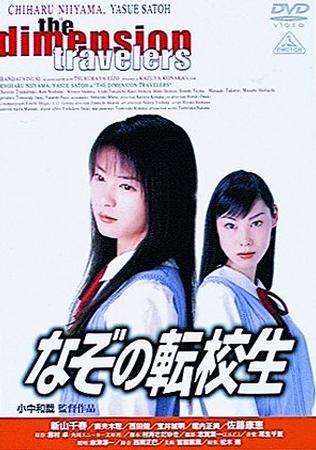
Nazo no Tenkousei or The Mysterious Transfer Student - by Taku Mayumura(Continued)

Mizutama:

But Hagio-san, if you had had the good fortune to have many SciFi friends, and had discussions like, "I read this and it was fun!", then don't you think that your "Oh boy, do I love SciFi!" feeling could have gotten sublimated or dissipated, and you ultimately might not have gone to the trouble of drawing SciFi manga?

Hagio:

Mmmm. I wonder. (laugh)

Mizutama:

Don't you agree? (laugh)

Sakai:

Wow, you are so pushy. (laugh) Didn't you have any SciFi friends?

Hagio:

No, I didn't. There were friends who would let me talk about it, but they wouldn't take any interest themselves. This was in middle school or high school. Conversations usually ended with "But that's a fabricated story after all."

Mizutama:

And if you tried to get them to read, they would turn it down insensitively like, "Space aliens are not really…[my thing]" (laugh)

Hagio:

Yes, yes! (laugh) Oh, I remember—when Taku Mayumura was serializing the novel "The Mysterious Transfer Student", I happened to be reading it in "The 7th Grade Course" or "The 8th Grade Course." I really enjoyed it a lot. Then much later, I read Mayumura-san's interview about why he chose that setting. He was told no space aliens, no future society, no anything. But they still wanted him to write a SciFi piece, so he decided on a parallel universe. I was impressed that even an author of that standing had to deal with such headaches.

(Continues to Part III)

SF Online Interview with Hagio (Part II-5)

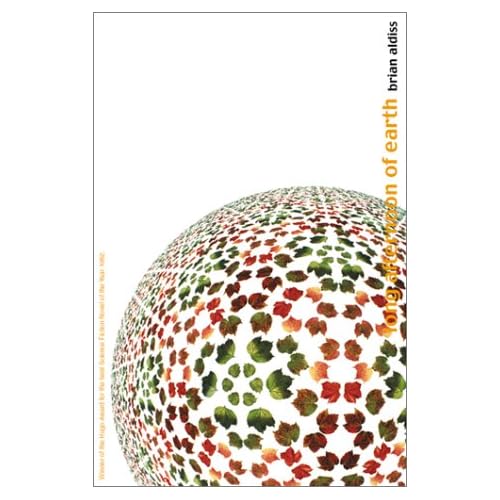
The Long Afternoon of Earth - by Brian Aldiss(Continued)

Mizutama:

I think there was a considerable number of people who were introduced to "SciFi" through your manga. In fact, weren't there many girls who were first exposed to Bradbury through reading your adaptations in Weekly Margaret?

Hagio:

Yes, I got several fan mails to that effect back then.

Mizutama:

In those days, Hagio-san, I feel you were not only letting your readers enjoy "SciFi" through your manga, but also providing the chance for them to encounter SciFi in traditional literary form [as opposed to manga form]. It came across from your works that you were not only an excellent cartoonist who drew SciFi manga, but also an ardent reader of SciFi. What hit me like, "Ah, this cartoonist really loves SciFi," was in "March Hares in Droves…" There was a little scene on the side, off the main plot, where a bespectacled girl and boy ran into each other and she dropped some books she was clutching in her arms. As he picked up the books, the boy said, "Wow, those are all Ballard—do you like New Wave?" As he was helping her, the girl said, "Yes, but I like Aldiss even more." That sort of conversation.

Sakai:

Sheesh, what a dialog! (laugh)

Mizutama:

But it was like this: If you are an adolescent SciFier who meets and falls in love with SciFi, you go on happily reading the various SciFi stories, but all the while feeling a bit lonely because you have no one to talk with about it—if you have that kind of feeling, then this is a fantasy you would dream of at least once! (laugh) Of course it is not that you need the opposite sex, but it's like, "If only I had a friend I could talk about SciFi with!"

Hagio:

Wow, thank you for remembering such an old piece. I probably got "Long Afternoon of Earth" from a rental bookstore and read it. Naturally, it is sad if you don't have a SciFi fan you can talk to.

(Continues)

Saturday, May 5, 2007

SF Online Interview with Hagio (Part II-4)

R is for Rocket - Adaptation by Moto Hagio(Continued)

Sakai:

Who decided which stories to adapt?

Hagio:

I did.

Sakai:

You picked your favorites?

Hagio:

Yes, but I also considered the target audience of Weekly Margaret—I picked my favorites as well as what I thought would be suitable for the readers. In truth, I thought "The Fog Horn" might not be very accessible, but that was my most favorite from Bradbury back then.

Mizutama:

But how about the story about finding a buried woman?

Hagio:

That's "The Screaming Woman."

Mizutama:

I feel that was less accessible to the readers of Weekly Margaret than "The Fog Horn."

Hagio:

Well, but there is definitely a girl in the story. While "The Fog Horn" has only a middle-aged man and a monster.

Mizutama:

Oh, is that how it goes? (laugh) But it's a masterpiece, "The Fog Horn."

Hagio:

It's a masterpiece indeed.

Sakai:

Then, the SciFiers who encountered and were won over by Hagio-san in "They Were Eleven" got blown away when they read the sequel "The Horizon in the East—The Eternity in the West."

Mizutama:

And then we got "Silver Triangle," and "Ten Billion Days and Hundred Billon Nights," then "Marginal." I also liked "Heiresses in the Cabbage Fields," [Note 1] which reminded me of Lafferty. Oh, by the way, while "Marginal" was serialized I recall being really excited, with a strong gut feeling that you surely must also love "The Left Hand of Darkness."

[Note 1] "Heiresses in the Cabbage Fields" (1973)—the apartment where the Year 24 Group gathered was also in the middle of the cabbage fields. The manic mood in the piece perhaps conveys the reminiscence of the life there.

Sakai:

What an opinionated fan! (laugh)

Hagio:

Ah, I did read "The Left Hand of Darkness." It was so good that I chased down everything by Le Guin. "Marginal" was about a world where only men were born. Incidentally, you've probably heard the news stories about a recent survey of shellfish along the coast of Japan. The study indicates that these shellfish have all been feminized because of endocrine disruptors in our environment. When my manager heard this news, she said, "That story in 'Marginal'—that was really about shellfish, wasn't it!?" I replied to her, "That's right, actually." (laugh)

(Continues)

SF Online Interview with Hagio (Part II-3)

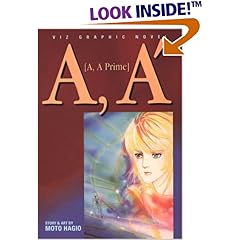
A, A' - by Moto Hagio, Matt Thorn(Continued)

Mizutama:

Ah, but I now remember female protagonists became more prevalent in your works after that. "Star Red," "A, A', " and such. It was also a girl who played the bigger role in "Mosaic Helix."

[Note 1] The image on the left is linked to Amazon.com where you can order "A,A'" translated by Matt Thorn.

Hagio:

Yes, but that girl in "Mosaic Helix" wasn't good.

Mizutama:

Wasn't she?

Hagio:

No she wasn't. Because partway through, she got trapped in the crystal.

Mizutama:

Well, but I liked that girl. Oh, this may be from a different period in terms of publication, but you published manga adapted from short stories by Bradbury in Weekly Margaret, didn't you?

Sakai:

How did it got started? [Note 1]

[Note 1] Hagio had been working with Shogakukan for her publication. Weekly Margaret was published by Shueisha.

Hagio:

That started when I met an editor from Weekly Margaret and we went out for drinks. Back then, I had seldom been treated to meals, so I couldn't decline any assignment requests after such meals. (laugh) So when I got an offer from that editor, I was shrinking away, saying, "I work so slowly, I can't do it." But that editor somehow found out that I was a big fan of Bradbury, and said, "We would get the adaptation rights if you could do it."

Mizutama:

Wow, what a great editor.

Hagio:

So I thought to myself, "Jeez, if I decline this I'll never have another opportunity to draw Bradbury manga in my life."

(Continues)

SF Online Interview with Hagio (Part II-2)

They Were Eleven by Moto Hagio - DVD Cover(Continued)

Mizutama:

In retrospect, "On the Porch a Girl With a Puppy…" was also SciFi, as well as "Asobidama (Marbles)" [Note 1], but I think what really established you as a "SciFi cartoonist" in the public mind was, after all, "They Were Eleven." When I read it, I instinctively sensed, "Ah, Hagio-san is paying tribute to the 'SciFi' that she grew up reading." Perhaps it was because this work appeared to contain exactly all the symbolic elements of "SciFi" that non-SciFi readers have vaguely in their mind. At least that's how it seemed to me. (laugh)

[Note 1] An early and long-lost SciFi piece by Hagio; some say it is a prequel to Keiko Takemiya's "To Terra". My husband never got to read this, to his deep regret.

Sakai:

"They Were Eleven" was about young people fighting for their survival within a confined situation, but in its sequel the theme was like society doesn't get better through mere individual efforts—it turned into a rather disillusioned, or a rather more measured story, right? Was that because of the restrained viewpoint that you've mentioned, in response to a more positive view of the future like that of Asimov?

Hagio:

No, I wasn't thinking that deeply, because the idea first came to me in my high school days. The SciFi plots I did back when I was doing "They Were Eleven" were generally in that vein; there were lots of characters like those wholesome, young, male protagonists. So I was thinking of a lot of adventure stories for such characters, but when I finally penned "They Were Eleven," the "model student"-ness of the hero really got on my nerves and I didn't see this as a good thing. So I did the sequel thinking perhaps I could do better next time, but it still didn't work out. (laugh) I thought to myself that I couldn't keep depicting those wholesome characters, and I junked all the other SciFi ideas. So I think there is timing in everything, the right moment to do things.

Mizutama:

Ah, I see. So "They Were Eleven" was from the early stages of "SciFi" addiction, when you hadn't developed any resistance and had severe symptoms (laugh), that type of "SciFi" for you. Mmmm, it wasn't completely off the mark then that I saw it as "paying tribute."

Sakai:

What are you talking about? (laugh)

(Continues)

SF Online Interview with Hagio (Part II-1)

The Antarctica Story(Continued from Part I)

Mizutama:

Now, let's talk about manga. We readers have your work, but as for your own experiences with SciFi manga, at that time wouldn't you have been reading Tezuka or Ishinomori—Ishimori back then—is that about right?

Hagio:

Yes. When I was in elementary school, a decent amount of SciFi stories appeared in shojo manga magazines. There was a cute SciFi story by Reiji Matsumoto—there was an incident [non-fiction] where the wintering team [of the Japanese expedition] left behind Taro and Jiro [sled dogs] in Antarctica. [In the story] They're rescued by space aliens, who augment their intelligence, and then Taro and Jiro come back to retaliate on the earthlings. Isn't it fun? (laugh)

Sakai:

That was in a shojo manga magazine?

Hagio:

Yes, it was.

Mizutama:

So you thought you would become someone who did those types of stories. No, not the revenge of Taro and Jiro; I mean SciFi manga.

Hagio:

Of course you are influenced by what you read. Even while you're in the middle of reading a book, you're appreciating how good it is. So I had a notebook for ideas, or so-called production notes of my own and that's where I wrote down the titles only or titles and rough plots, and the majority of them were SciFi. Perhaps there may have been a lot of outrageous ideas, I'm afraid. (laugh)

Sakai:

So at the point when you became a cartoonist, you already had the intention of doing SciFi, didn't you?

Hagio:

My head was half-filled with SciFi, so I wanted to.

(Continues)

SF Online Interview with Hagio (Part I-5)

Do Androids Dream of Electric Sheep? - by Philip K. Dick(Continued)

Hagio:

It came home to me as I read it that this was what it meant when everything was lost.

Sakai:

Was it around the time of your debut?

Hagio:

No, I think it was about one year after that.

Mizutama:

Then you pursued Dick like a junkie.

Hagio:

Yes, I did.

Mizutama:

When it comes to Dick, don't you get shocked twice? The first time is when you first read it. And then again after reading several other of his works, when you realize none of them offer any salvation. (laugh)

Hagio:

Yes, yes! One after another, every single book you read! On the other hand, other American SciFi is so positive and, to be blunt, a bit shallow, like, I had been thinking, "How can you be so happy-go-lucky?"—So Dick restored the balance for me.

Mizutama:

Well then, the flow went like this for you: first Asimov, then Bradbury…

Hagio:

I got the first jolt from Asimov, then the second from Bradbury, and then "Childhood's End" by Clark…

Mizutama:

How about Heinlein?

Hagio:

None from Heinlein, though I enjoyed his books.

(Continues to Part II)

SF Online Interview with Hagio (Part I-4)

The October Country - by Ray Bradbury(Continued)

Mizutama:

Was it then that you also encountered Bradbury?

Hagio:

Ah, Bradbury, he was good! I was knocked out. It was a bit later, but I was still in Kyushu. One day I went to a bookstore to look for something to read, and there were two anthologies by a certain Ray Bradbury. One was "R is for Rocket" and the other was "The October Country." I had never heard of the author, but I thought he must be good if he had two books out, so I compared the cover art and got the one with the red roof, because it was cuter. Then, after finishing the book overnight, I rushed back to the bookstore, praying that no one had bought it before me, and purchased the other. (laugh)

Mizutama:

Ah, I totally understand how you must have felt.

Hagio:

As you know, in the provinces the total available amount of SciFi was basically low, so I encountered many more SciFi books after I moved to Tokyo. When I started living in Tokyo, there was a bookstore near Shogakukan, and I happened to have a few extra minutes before my appointment with my editor, and by coincidence I laid my hands on what turned out to be "Do Androids Dream of Electric Sheep?" (by Philip K. Dick). Oh, I was so completely hooked.

Mizutani:

You got the calling from Dick, oh dear.

Hagio:

I was completely floored. At any rate, the futures depicted by people like Asimov, Clark, and Heinlein are positive. Of course they do episodes like the machine civilization going too far and causing some adverse effect, but they all have a fundamental trust in humanity, in that humans can probably get over those problems somehow. However, in Dick's stories, the future is annihilation, with only bleak prospects, and you have no choice but to live under its shadow. I found bottomless despair in his books. I had read about an underground elite class and the post-WWIII worlds, but I was completely blown away by Dick's darkness.

Sakai:

Isn't the ending like the one from "Electric Sheep" ironically much scarier than [those stories where] the despair finally hits you at the end?

Hagio:

Ve-e-ry scary.

Sakai:

A lot of things happen, but there is nothing you can do but go home and sleep.

(Continues)

SF Online Interview with Hagio (Part I-3)

(Continued)

Hagio:

I was reading those. Then in middle school there was a magazine called "Middle School Course" that came with a supplement of SciFi or mystery stories adapted for younger readers. Among them was "Planet SOS" [adapted from "The Currents of Space"] by Asimov, and I was engrossed in it completely. I got addicted to SciFi then and started to hunt for them.

Mizutama:

"I need…more SciFi!"

Hagio:

Yes, exactly. Until that time I was at a point where I would read it if I could find it, but I didn't care if none was available. But when I entered high school there was a rental bookstore nearby and, was it from Sogen? There was a series of slender books. The series contained both mysteries and SciFi.

Mizutama:

Wasn't it from Hayakawa Shobo?

Sakai:

Yes, from Hayakawa.

Hagio:

Hayakawa, I see.

Mizutama:

They were slightly elongated and on the spine of each book was a red "SF" logo against a silver background.

Hagio:

Yes, that's it! So I rented one every day for 10 or 15 yen per volume. And I also hunted for "SF Magazine" in the used bookstores.

Mizutama:

Ah, I see you started to look for more potent stuff. (laugh). At that point you might have been able to trace back all the way to the first issue of SF Magazine?

Hagio:

I did find and read three thin issues that appeared to have come out shortly after the launch of the magazine, but it was around the time of the final installment of "Endless Flow" [probably this?] when I started tracking issues consciously, so perhaps they were from a bit later?

Mizutama:

So what was the lineup of the books you rented on a daily basis?

Hagio:

Mainly SciFi from the 50's, I think. "Inter Ice Age 4" by Kobo Abe, and something by the title of "Time Machine" or something, was it by Paul…?

Sakai:

"Time Patrol" perhaps? That's by Poul Anderson.

Hagio:

And also "Lest Darkness Fall" and so forth. I think the mix was about 90% translation, 10% original Japanese.

(Continues)

Friday, May 4, 2007

SF Online Interview with Hagio (Part I-2)

Around the Moon - by Jules Verne(Continued)

Mizutama:

Oh, yes, I see. Ah, to sum up the matter, today I would like to interview Hagio-san, not as a "vampire cartoonist," or "gymnasium [Note 2] cartoonist," but as a "SciFi cartoonist." First of all, I would like to start by asking you about your background as a reader of SciFi in literary form [as opposed to manga form].

[Note 2] refers to Hagio's works that use a German Gymnasium (boarding school) as a setting, such as "The November Gymnasium," "Tooma no Shinzou," and "Kotori no su."

Hagio:

Well, during elementary school, the library had a collection, or the complete works or something like that, of juvenile SciFi stories. I think it was from Kodansha, but I could be wrong. It was made up of a dozen volumes.

Sakai:

There were several, like the Iwasaki Shoten Edition.

Mizutama:

World SciFi Masterpieces for Boys and Girls, that kind of thing, right?

Hagio:

Those volumes came with such dramatic titles as "Around the Moon," "So-and-so Demon" and "When Worlds Collide," and they were in short a collection of old SciFi stories. They completely ignored air, mass, and all, that kind of thing.

Mizutama:

How about "The Cybernetic Brains"?

Hagio:

Mmmm, I don't think they had that one. But there were quite a few stories where a lot of space aliens show up. One story was about going to the Moon and finding a kingdom there. And you go there via a sphere-shaped rocket, and because of the gravity between the Earth and the Moon, you're pulled to the Moon if you open the window on the Moon side, and to the Earth if you open the opposite window.

Sakai:

Ah, that's a story by Wells. When you open the window made of anti-gravity material, the gravity on that side kicks in and the spaceship falls toward it.

Mizutama:

Oh god, it's so SciFi (laugh).

(Continues)

SF Online Interview with Hagio (Part I-1)

A Cruel God Reigns by Moto HagioI found another interesting interview with Hagio done by a now-inactive online SciFi magazine. It was part of a series called "SF Manga-do" or "The Way of SciFi Manga" moderated by Keinojo Mizutama (mizutama = polka dots), a female illustrator/cartoonist/columnist specializing in SciFi. Mr. Sakai was the moderator and an editor at SF Online (the site is still up, but no longer active). The interview was part of its May 24, 1999 issue.

This is a very long interview, so I have to break it up into manageable chunks.

-----------------------------------------
Mizutama:

Today we would like to ask Hagio-san, as a SciFi cartoonist /SciFi reader, to talk about SciFi and manga…wow, what a thick-headed way of saying it (laugh). Sorry, I am quite nervous. Ever since I read "On the Porch A Girl With a Puppy…" (1971) I have been reading your works in real time.

Hagio:

Ah, I see.

Mizutama:

When "Tooma no Shinzou" was appearing in installments, I used to send in a direct response card every week. To keep the series running as long as possible by contributing to the reader survey.

Hagio:

That's quite flattering. Did you win any original artwork?

Mizutama:

No, not even once. Look, Sakai-san, if you sent in the card, you could win an original artwork of the title page back then. Oh, I wanted one so much, so badly. But I never won.

Sakai:

Haven't you reverted back into a mere fan, today? (laugh)

Mizutama:

Because! Ah, I'm so sorry, really. Well, then, Hagio-san, including the current serialization of "A Cruel God Reigns," you haven't really done any "SciFi manga" for these past several years, or have you? Perhaps, by any chance, it may not be too pleasing to you to be called a "SciFi cartoonist" at this point? Like, "I have done so much in other genres," and so forth.

Hagio:

No, it's not like that at all.

Mizutama:

I was debating with myself as to whether it is perhaps as delicate a problem as calling Ms. Ryoko Yamagishi a "ballet cartoonist."

Hagio:

I don't think Yamagishi-san would be concerned about it, either. After all, she swept the shojo manga world with "Arabesque", so I doubt she would find it a problem. But if you think about that, you could also call her an "Umayado [Note 1] cartoonist." (laugh)

[Note 1] Umayado is the name of the main character from "Hino Izuru Tokoro no Tenshi", another must-read, according to my husband.

(Continues)