
Showing posts with label Ray Bradbury. Show all posts

Sunday, May 6, 2007

SF Online Interview with Hagio (Part II-5)

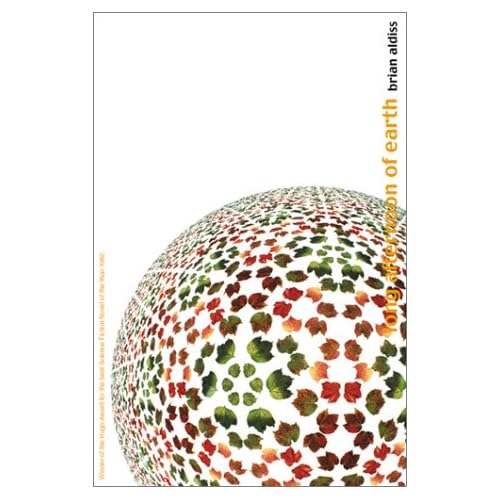
The Long Afternoon of Earth - by Brian Aldiss(Continued)

Mizutama:

I think there was a considerable number of people who were introduced to "SciFi" through your manga. In fact, weren't there many girls who were first exposed to Bradbury through reading your adaptations in Weekly Margaret?

Hagio:

Yes, I got several fan mails to that effect back then.

Mizutama:

In those days, Hagio-san, I feel you were not only letting your readers enjoy "SciFi" through your manga, but also providing the chance for them to encounter SciFi in traditional literary form [as opposed to manga form]. It came across from your works that you were not only an excellent cartoonist who drew SciFi manga, but also an ardent reader of SciFi. What hit me like, "Ah, this cartoonist really loves SciFi," was in "March Hares in Droves…" There was a little scene on the side, off the main plot, where a bespectacled girl and boy ran into each other and she dropped some books she was clutching in her arms. As he picked up the books, the boy said, "Wow, those are all Ballard—do you like New Wave?" As he was helping her, the girl said, "Yes, but I like Aldiss even more." That sort of conversation.

Sakai:

Sheesh, what a dialog! (laugh)

Mizutama:

But it was like this: If you are an adolescent SciFier who meets and falls in love with SciFi, you go on happily reading the various SciFi stories, but all the while feeling a bit lonely because you have no one to talk with about it—if you have that kind of feeling, then this is a fantasy you would dream of at least once! (laugh) Of course it is not that you need the opposite sex, but it's like, "If only I had a friend I could talk about SciFi with!"

Hagio:

Wow, thank you for remembering such an old piece. I probably got "Long Afternoon of Earth" from a rental bookstore and read it. Naturally, it is sad if you don't have a SciFi fan you can talk to.

(Continues)

Saturday, May 5, 2007

SF Online Interview with Hagio (Part II-3)

A, A' - by Moto Hagio, Matt Thorn(Continued)

Mizutama:

Ah, but I now remember female protagonists became more prevalent in your works after that. "Star Red," "A, A', " and such. It was also a girl who played the bigger role in "Mosaic Helix."

[Note 1] The image on the left is linked to Amazon.com where you can order "A,A'" translated by Matt Thorn.

Hagio:

Yes, but that girl in "Mosaic Helix" wasn't good.

Mizutama:

Wasn't she?

Hagio:

No she wasn't. Because partway through, she got trapped in the crystal.

Mizutama:

Well, but I liked that girl. Oh, this may be from a different period in terms of publication, but you published manga adapted from short stories by Bradbury in Weekly Margaret, didn't you?

Sakai:

How did it got started? [Note 1]

[Note 1] Hagio had been working with Shogakukan for her publication. Weekly Margaret was published by Shueisha.

Hagio:

That started when I met an editor from Weekly Margaret and we went out for drinks. Back then, I had seldom been treated to meals, so I couldn't decline any assignment requests after such meals. (laugh) So when I got an offer from that editor, I was shrinking away, saying, "I work so slowly, I can't do it." But that editor somehow found out that I was a big fan of Bradbury, and said, "We would get the adaptation rights if you could do it."

Mizutama:

Wow, what a great editor.

Hagio:

So I thought to myself, "Jeez, if I decline this I'll never have another opportunity to draw Bradbury manga in my life."

(Continues)

SF Online Interview with Hagio (Part I-5)

Do Androids Dream of Electric Sheep? - by Philip K. Dick(Continued)

Hagio:

It came home to me as I read it that this was what it meant when everything was lost.

Sakai:

Was it around the time of your debut?

Hagio:

No, I think it was about one year after that.

Mizutama:

Then you pursued Dick like a junkie.

Hagio:

Yes, I did.

Mizutama:

When it comes to Dick, don't you get shocked twice? The first time is when you first read it. And then again after reading several other of his works, when you realize none of them offer any salvation. (laugh)

Hagio:

Yes, yes! One after another, every single book you read! On the other hand, other American SciFi is so positive and, to be blunt, a bit shallow, like, I had been thinking, "How can you be so happy-go-lucky?"—So Dick restored the balance for me.

Mizutama:

Well then, the flow went like this for you: first Asimov, then Bradbury…

Hagio:

I got the first jolt from Asimov, then the second from Bradbury, and then "Childhood's End" by Clark

Mizutama:

How about Heinlein?

Hagio:

None from Heinlein, though I enjoyed his books.

(Continues to Part II)

SF Online Interview with Hagio (Part I-4)

The October Country - by Ray Bradbury(Continued)

Mizutama:

Was it then that you also encountered Bradbury?

Hagio:

Ah, Bradbury, he was good! I was knocked out. It was a bit later, but I was still in Kyushu. One day I went to a bookstore to look for something to read, and there were two anthologies by a certain Ray Bradbury. One was "R is for Rocket" and the other was "The October Country." I had never heard of the author, but I thought he must be good if he had two books out, so I compared the cover art and got the one with the red roof, because it was cuter. Then, after finishing the book overnight, I rushed back to the bookstore, praying that no one had bought it before me, and purchased the other. (laugh)

Mizutama:

Ah, I totally understand how you must have felt.

Hagio:

As you know, in the provinces the total available amount of SciFi was basically low, so I encountered many more SciFi books after I moved to Tokyo. When I started living in Tokyo, there was a bookstore near Shogakukan, and I happened to have a few extra minutes before my appointment with my editor, and by coincidence I laid my hands on what turned out to be "Do Androids Dream of Electric Sheep?" (by Philip K. Dick). Oh, I was so completely hooked.

Mizutani:

You got the calling from Dick, oh dear.

Hagio:

I was completely floored. At any rate, the futures depicted by people like Asimov, Clark, and Heinlein are positive. Of course they do episodes like the machine civilization going too far and causing some adverse effect, but they all have a fundamental trust in humanity, in that humans can probably get over those problems somehow. However, in Dick's stories, the future is annihilation, with only bleak prospects, and you have no choice but to live under its shadow. I found bottomless despair in his books. I had read about an underground elite class and the post-WWIII worlds, but I was completely blown away by Dick's darkness.

Sakai:

Isn't the ending like the one from "Electric Sheep" ironically much scarier than [those stories where] the despair finally hits you at the end?

Hagio:

Ve-e-ry scary.

Sakai:

A lot of things happen, but there is nothing you can do but go home and sleep.

(Continues)